Do you not have the Username and Password to access the Order Area?
Do you wish to place an order?
In the hydraulics industry, the sudden failure of a flexible hose is one of the most critical issues affecting system uptime. An unplanned failure can lead to equipment shutdown, oil leakage, and, in the most serious cases, safety risks for operators.
The real cost of a damaged hydraulic hose goes far beyond simply replacing the component. Additional—and often more significant—costs include:
For this reason, preventive maintenance of hydraulic hoses is the most effective way to reduce risks and operating costs. Through scheduled inspections, it is possible to detect early signs of wear and take action before failure occurs, ensuring greater safety and consistent system performance.
Inspection frequency is a key factor in ensuring system safety and reliability. There is no one-size-fits-all interval, as it depends on the type of equipment, operating conditions, and stress levels.
As a general rule, a daily visual inspection—or one performed at every machine start-up—is always recommended. This allows early detection of wear, leaks, or anomalies in system behavior and is a fundamental part of a proper preventive maintenance plan.
In addition to daily checks, more in-depth periodic inspections should be scheduled. In the absence of specific manufacturer guidelines, the following operational recommendations can be used:
Inspection frequency may vary depending on pressure, temperature, vibrations, environmental conditions, and system criticality. In demanding applications, hydraulic hose maintenance should be scheduled more frequently to minimize the risk of unexpected downtime. In all cases, operational experience and equipment history remain essential references for defining the correct inspection plan.
A practical support tool for hydraulic hose maintenance is the creation of a maintenance log. Recording installation dates, operating hours, and performed interventions for each hose helps plan replacements and avoid oversights. The use of labels or color coding further improves inspection management.
Most hydraulic hose failures can be prevented through proper visual inspection. No complex tools are required—just a systematic check to identify early signs of deterioration.
Here are the 8 main indicators that a hose should be replaced:
These indicate wear caused by friction or contact with metal surfaces. If the reinforcement layer is exposed, the risk of hose failure increases significantly.
These may result from internal deterioration, irregular pressure, or fluid incompatibility with the hose material.
Visible at fittings or along the hose body. Even small leaks indicate a developing failure and require immediate action.
Often caused by improper installation or poor routing. These conditions compromise hose structure and reduce pressure resistance.
This can be caused by high temperatures, material aging, or exposure to harsh environmental conditions.
Fittings are critical points in hydraulic systems—corrosion or damage can compromise the sealing of the entire system.
Changes in color, odor, or the presence of particles may indicate internal hose degradation or broader system issues.
Even in the absence of visible damage, respecting lifecycle limits is essential in preventive hydraulic hose maintenance.
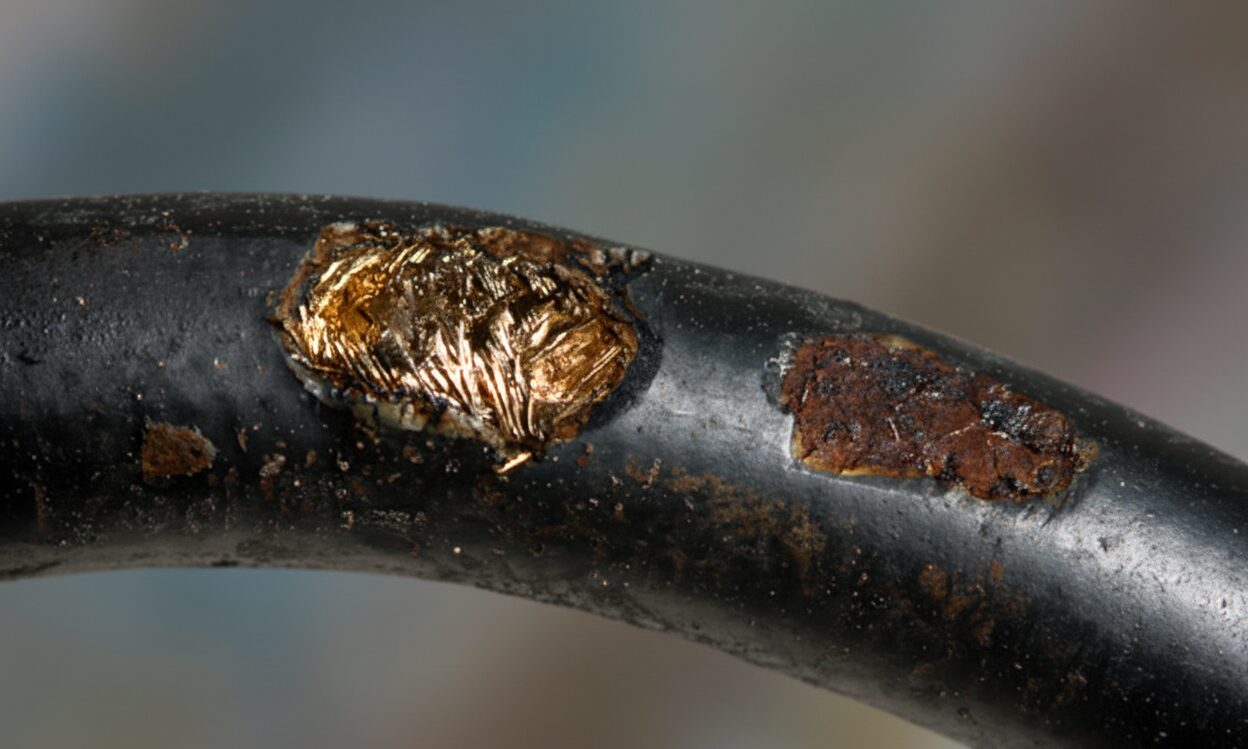
A proper visual inspection must always be combined with correct installation, as improper assembly significantly accelerates wear on both hoses and fittings.
To learn more about proper assembly best practices, it is useful to consult our guide on the correct installation of hydraulic hose assemblies.
Visual inspection is the first level of hydraulic hose maintenance, but for a more comprehensive assessment it should be complemented by tactile inspection and, when necessary, pressure testing.
Manual inspection helps identify anomalies that are not visible, such as soft spots, swelling, or variations in stiffness along the hose. These signs may indicate internal deterioration even without visible external damage.
This activity must only be performed when the system is shut down and fully depressurized. Pressurized fluids can be extremely dangerous and pose a serious risk to operators.
In some cases, a controlled pressure test may be useful—especially when the hose shows signs of wear but no visible leaks. This allows observation of hose behavior under load and detection of issues such as vibrations or deformation.
The service life of hydraulic hoses is closely linked to operating conditions and cannot be defined universally. Even without visible defects, hoses undergo progressive aging and degradation of their mechanical properties, which can eventually lead to sudden failure.
According to the SAE J1273 standard, hose lifespan is not standardized, as it depends directly on operating and environmental conditions. Under optimal storage conditions, a hose can retain its properties for up to approximately 10 years. However, once in service, its lifespan becomes variable and strictly dependent on the factors that also drive wear.
Key factors affecting both durability and degradation include:
These factors not only reduce hose lifespan but also accelerate internal structural degradation, making sudden failure possible even without visible external signs.
For this reason, hydraulic hose maintenance should not rely solely on visual appearance. In critical systems, it is best practice to schedule preventive hose replacement at defined intervals, reducing the risk of unexpected failures and improving overall system reliability.
Two main strategies are commonly used:
In most cases, a combination of both approaches provides the most effective maintenance strategy.
Proper management of hydraulic hoses involves not only their use in systems but also correct storage practices. A hose stored improperly can deteriorate over time even before being put into service, compromising performance and safety.
As highlighted in industry guidelines, environmental factors such as light, ozone, humidity, temperature, and chemicals can significantly affect elastomer materials. For this reason, proper storage is an integral part of preventive hydraulic hose maintenance.
To ensure optimal storage conditions, follow these best practices:
In addition to preservation, organized warehouse management helps monitor hose condition over time, preventing the use of degraded components and ensuring reliable performance at installation.
A hydraulic hose maintenance plan is truly effective only when supported by immediate availability of spare parts. Even the best inspection and replacement planning loses effectiveness if the required component is not available when needed.
For this reason, inventory availability is crucial for ensuring operational continuity and reducing downtime. Quick access to components allows timely intervention, avoiding delays and minimizing the economic impact of production stoppages.
In this context, Foscarin Group offers a consistently stocked warehouse designed to respond quickly to customer needs and support both preventive and emergency maintenance activities. Discover our full range of hydraulic hoses.
For OEMs and companies with recurring consumption, we also offer a kitting service, providing complete, customized kits ready for installation. This solution simplifies procurement, reduces handling time, and improves overall maintenance efficiency.


