Do you not have the Username and Password to access the Order Area?
Do you wish to place an order?
The hydraulic hose selection is crucial to ensure the safety, reliability, and continuous operation of any hydraulic system. Using an incorrectly chosen hose can compromise system performance, shorten component lifespan, and increase the risk of failures or hazardous situations.
Every application comes with specific operating conditions, requiring careful analysis of multiple technical factors. Even when selection seems straightforward, a structured approach helps avoid errors, extend the life of assemblies, and optimize long-term operating costs.
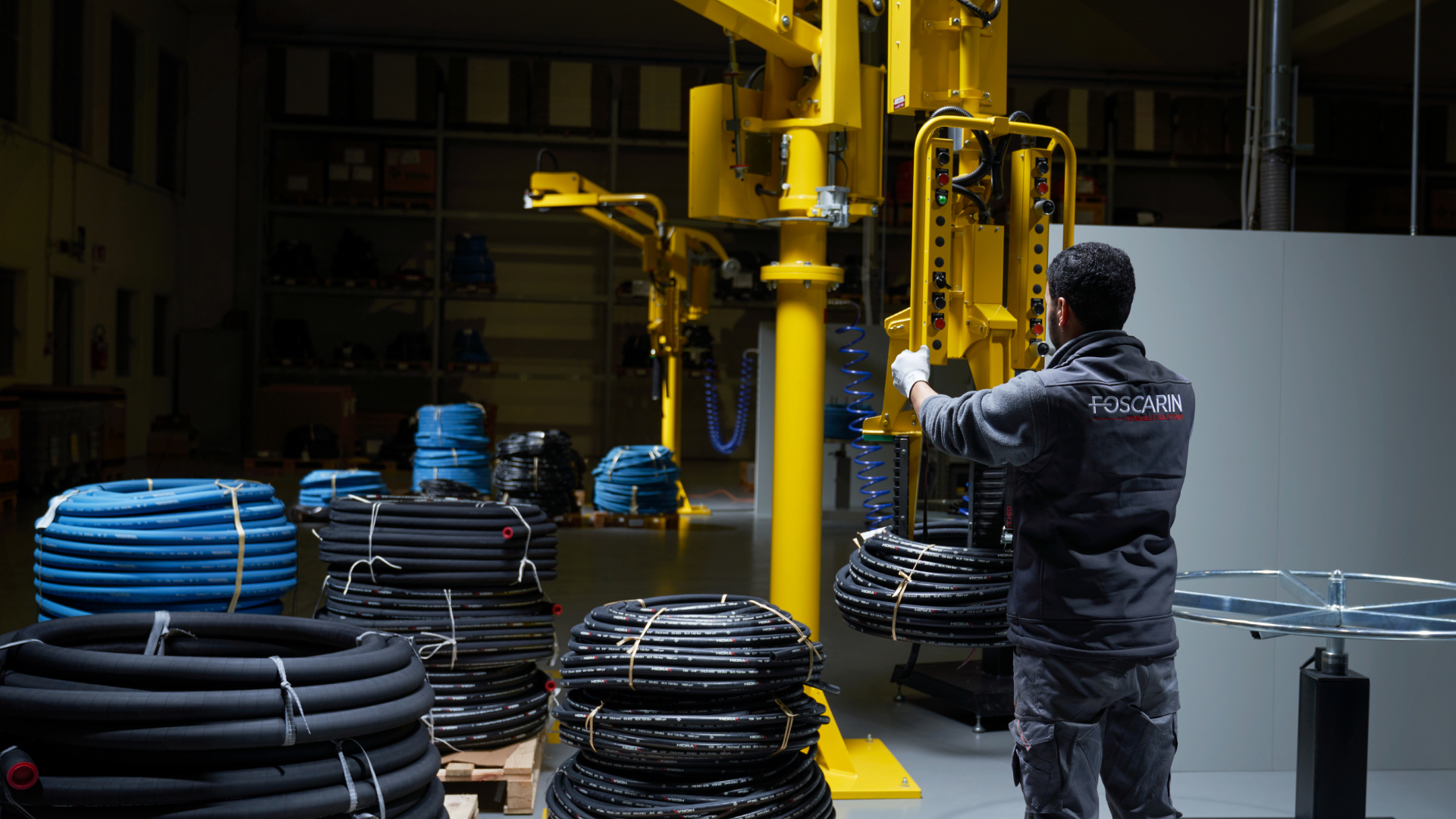
The STAMPED method is an acronym designed to help remember the seven main criteria to consider when selecting a hydraulic hose.
The internal diameter of the hydraulic hose directly affects system efficiency and safety. Choosing the correct size ensures minimal pressure drop, prevents issues caused by excessive fluid velocity, turbulence, or overheating, and reduces material stress, prolonging hose life.
Different measurement systems are used in hydraulics to identify hose sizes. To accurately match different dimensional standards, refer to our hydraulic hose size conversion table.
Fluid and ambient temperature critically influence hose selection. The temperature limits indicated for a hose refer to the maximum fluid temperature and must not be exceeded, even during temporary spikes.
Continuous use at high temperatures accelerates the degradation of elastomeric materials, shortening hose life and affecting the connection with fittings. Temperature and pressure also interact: higher temperatures may require reducing operating pressure.
Ambient temperature must also be considered. Extreme cold or strong thermal exposure can affect performance and longevity. Selecting hoses capable of withstanding actual minimum and maximum application temperatures is therefore essential.
To select the correct hose, carefully analyze the operating context, including where and how the hose will be used. Important factors include:
Machine or system type
Operating profile
Working and peak pressures
Fluid and ambient temperature
Minimum bend radius
Flexing frequency
Fluid compatibility
External stress
Environmental conditions
For demanding applications such as mining, industrial plants, or marine environments, it is advisable to choose hoses with special covers resistant to abrasion, flames, chemicals, ozone, and UV, along with fittings with specific treatments.
For more details on applications and recommended solutions, visit our applications page.
Selecting the right materials ensures full compatibility with the conveyed fluid, including:
Mineral oils
Bio-oils
Compressed air
Hot water
Hose, cover, fittings, and O-rings must resist the fluid’s chemical properties, avoiding leaks and premature degradation. Even minor differences in fluid composition can affect hose performance. Use our fluid compatibility table to choose the most suitable hose.
Ensure that the hose’s maximum working pressure, together with that of the fittings, meets or exceeds the system’s pressure, including any spikes. Pressure peaks not detected by standard gauges can significantly reduce hose life, so consider vibrations, dynamic loads, and work cycles.
The maximum pressure of an assembly is determined by its component with the lowest rating; fittings and adapters must have a pressure rating equal to or higher than the hose.
Correct sizing also considers the hose’s function within the system: supply, return, drain, suction, or pilot lines have different requirements for pressure, flow, and cycle frequency, affecting assembly safety and longevity.
Press fittings play a critical role in ensuring hose safety and durability. Fittings must be compatible with the hose and its maximum working pressure, complying with international standards. Mechanical strength and sealing capability are particularly important in heavy-duty applications or specialized installations.
For recommended fittings, see our dedicated catalog section.
Ensure the system’s required flow rate is delivered without excessive pressure drops.
Oversized hoses add unnecessary weight and cost, while undersized hoses cause pressure loss, overheating, and reduced system performance.
For replacements, the hose’s original internal diameter can usually be maintained if the system can handle the maximum required flow. For new or modified systems, consider fluid velocity, allowable pressure drop, hose length, number of fittings, fluid type, and temperature.
Using nomographs or calculation tools helps identify optimal conditions, preventing pressure, vibration, and overheating issues.
Frequent mistakes can compromise system safety, performance, and durability:
Underestimating peak pressures and only considering nominal pressure
Material incompatibility causing leaks or premature degradation
Mixing products from different suppliers, risking hose-fittings incompatibility
Ignoring harsh environmental conditions such as abrasion, vibration, or chemical exposure
Excessive bending or cyclic movements stressing the hose
Neglecting work cycles and dynamic loads, critical in demanding applications
To reduce risks and errors during installation, see our article Proper Installation of Hydraulic Hose Assemblies.
Even properly selected hoses experience wear. To maintain safety and reliability, implement a preventive maintenance plan including:
Periodic visual inspection
Checking for abrasion, bulges, or cracks
Inspecting for leaks or damaged fittings
Scheduled replacement of the most stressed hoses
Preventive replacement minimizes unexpected downtime and maintains high safety and reliability standards.
Choosing the right hydraulic hoses is not just about components: having a reliable technical partner helps identify the best solution for each application, reducing risks and errors during installation.
To find the hose that best fits your needs, browse our hydraulic hose catalog with all available solutions.
If you need technical assistance, clarifications, or a personalized quote, our team is ready to help. Contact us directly via our contact form to receive support at every stage of selection and supply.


